Need stamped concrete in New Castle?
Planning a driveway, patio or stamped surface? Request an estimate, or request a callback to check provider availability. There is no obligation.
No obligationRequest an estimate and compare
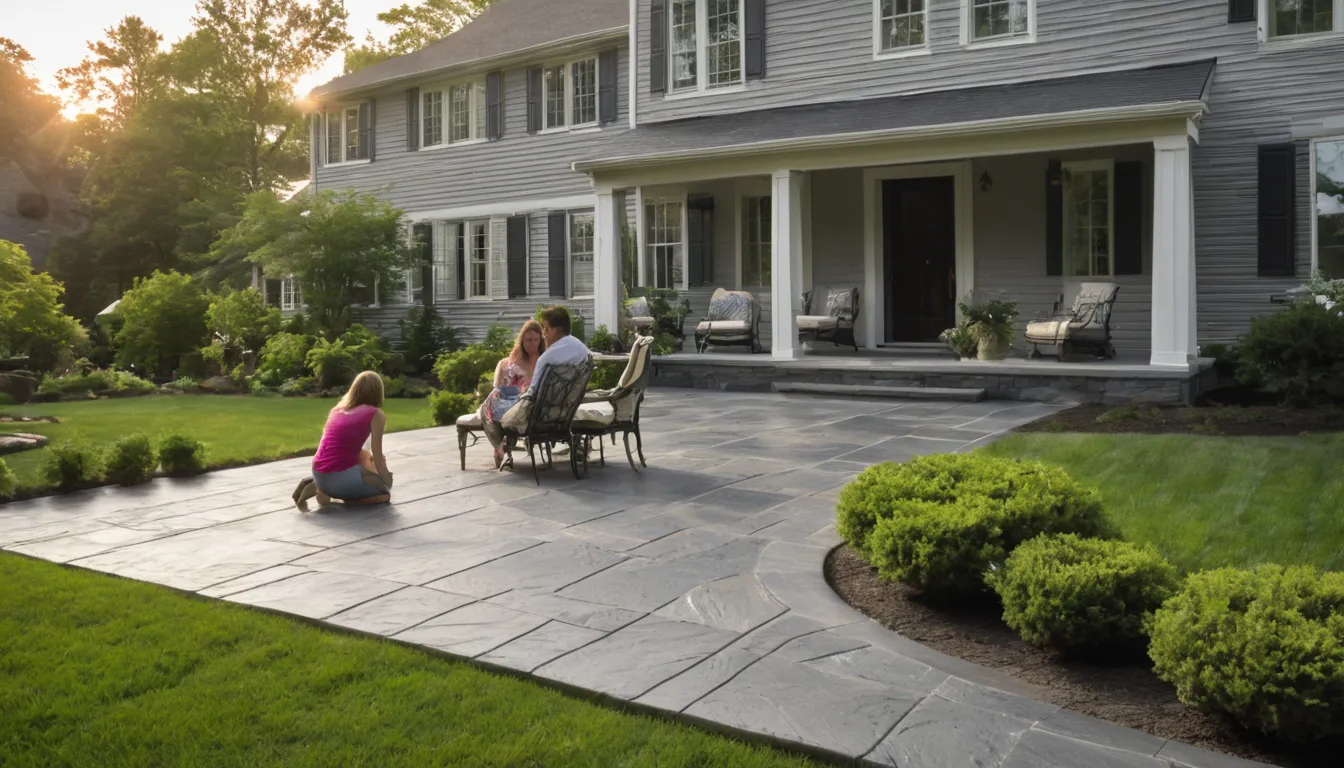
Stamped concrete is poured like any other slab, then pressed with patterns while it is still soft. The result can look like slate, brick, stone or wood, but it is one continuous surface. Think of a cake with a decorated top: the cake does the heavy lifting, and the decoration is what people notice. Color is added through the mix or on the surface, and a sealer finishes the job.
Replydrinks Concrete is a referral service for homeowners in the New Castle area. It explains how the work is usually done and helps you line up estimates from independent local providers. The providers in our network handle the pouring and stamping, not Replydrinks Concrete. You compare their answers, ask your questions, and decide at your own pace, with no obligation.
Stamped concrete is regular concrete with a pattern pressed into the top while it is still soft. Picture pressing a cookie cutter into dough. The dough underneath is ordinary. The shape on top is what you see.
That shape can copy slate, brick, cobblestone, flagstone or even wood planks. Most people choose it because they want a finished look without laying thousands of separate pieces.
The process looks simple from the street. Underneath, there are several steps that decide whether it lasts.
A slab is only as steady as what sits under it. Think of a table on a wobbly floor. A provider digs out the area, adds compacted gravel, sets forms, and often places steel or mesh for strength. Then the season matters. In places with humid summers and cold winters, the weather on pour day changes how fast the concrete sets.
Color can be mixed into the whole batch, like dye stirred into frosting. Or a powder can be worked into the top layer, like dusting flour over bread. Many providers use both, so the base tone is even and a second tone adds depth.
There is a short stretch when the concrete is firm enough to hold a shape but soft enough to take it. It is a bit like pressing a fingertip into setting gelatin. Too early and it slumps. Too late and it will not take the pattern. Experienced providers watch heat, humidity and wind to find that moment.
After curing, a sealer goes on. It protects the color and helps the surface shed water and stains. Ask which sealer is used and how often it should be redone.
Common choices include random stone, running-bond brick, cobblestone, and plank-style wood. Border bands and a center field in a different pattern are popular for stamped concrete patios.
Earth tones such as tan, charcoal and warm gray tend to blend with colonial and split-level homes. Brick reds and soft slate blues are also common. Ask each provider to show real photos of finished work, since small samples can look different at full size.
Patios, walkways, pool decks and entry landings are common concrete flatwork spots for stamping. Wide, fairly level areas let the pattern show clearly.
Steep slopes, constantly damp shade and areas that get heavy de-icing salt need extra planning. A provider can explain which sealer, texture and joint layout suit those spots. If your concern is concrete driveway repair or foundation repair experts, that is a different kind of job and a different kind of provider.
Pavers are like a floor made of building blocks. Stamped concrete is more like a single printed sheet. Neither is a fit for everyone.
Ask each provider to explain why they lean one way for your yard.
Most projects spread over several working days, with extra waiting while the concrete cures. Weather can push dates around. Providers vary, so ask for a written schedule.
Busy households can ask about walkway access, where cars can park, and how to keep kids and pets off wet concrete. Request a callback to check provider availability, then share your school runs and work hours so the schedule fits.
Wash with mild soap and water. Reseal on the schedule your provider gives you, often every few years. Use plastic shovels in winter and ask which de-icers are safe for your sealer. Small hairline cracks can appear in any slab, so ask how the provider handles control joints.
Gather at least two or three written quotes. Ask each provider to price the same size, pattern, base depth and sealer, so you can compare fairly. Ask who handles permits, what the cleanup plan is, and for proof of the provider's own license and insurance where required locally.
Take your time. Replydrinks Concrete only helps you reach independent providers. The choice, and the pace, stay with you.
Slate, brick, cobblestone or wood plank looks pressed into one continuous poured surface.
Providers can tint the mix or surface, then seal it to protect the tone.
Digging, gravel base, forms and reinforcement are usually part of a complete quote.
Ask whether cleanup, joint cutting and the final sealing are listed in your written estimate.
Prices in the U.S. vary by size, pattern, color, soil and local labor. These ranges are general only, so ask each provider for a written quote that lists every item.
| Item | Typical range | Notes |
|---|---|---|
| Basic stamped surface, per sq ft | $8 – $18 | One pattern, one color, simple shape |
| Detailed patterns or multi-color work, per sq ft | $14 – $25 | More labor and skill involved |
| Typical 300 sq ft patio, total | $3,000 – $7,500 | Depends on site and design |
| Excavation and gravel base, per sq ft | $1 – $4 | Higher on poor or sloped soil |
| Accent color or antiquing, per sq ft | $1 – $5 | Adds depth to the surface |
| Sealing and resealing, per sq ft | $1 – $3 | Needed again every few years |
Share the size, location, patterns you like and any dates that matter for your household.
Use the form to ask for estimates from independent providers in our network.
Line up scope, base depth, sealer and schedule so the quotes are truly comparable.
Pick a provider at your own pace, or walk away with no obligation.
See several written estimates side by side and choose without any pressure.
Learn why each step matters before you talk with providers.
Local providers do the work, so you can ask them direct questions.
No obligation, so you can decide when your household is ready.
Planning a driveway, patio or stamped surface? Request an estimate, or request a callback to check provider availability. There is no obligation.
No obligationWith a solid base and regular resealing, stamped concrete can serve for many years. Results depend on soil, weather, salt use and upkeep, so ask your provider what to expect locally.
A smooth sealed surface can be slick when wet. Providers can add a slip-resistant additive to the sealer or choose a more textured stamp, which is worth asking about for pool areas, steps and shaded spots.
Any concrete can develop cracks. Providers cut control joints so cracks tend to follow planned lines, and they often hide them in the pattern. Ask how your provider plans the joints.
Planning a driveway, patio or stamped surface? Request an estimate, or request a callback to check provider availability. There is no obligation.
No obligation